
05 – Accident & Emergency
| Steve Chowne | Vocals, Keys | Tush Hamilton | Guitars | Chris Green | Sound Engineering |
Freddy the 4-Track has died, Tush is in Cordoba, Chris is in Wiltshire.
There are 5.6 billion people in the world, and we have two kids: Alex and Elliot who have been distracting, smelly and lovely. The others are similarly procreating – it’s like a pandemic.
Five years have passed and we’ve filled the house with the plastic crap that comes with starting a family. I’ve been working for another organisation for enough years now, in which I recognise most of the problematic qualities of my preceding employer, despite it being smaller. I now get to play more with spaceships than aeroplanes, so I’m contributing significantly less to the destruction of the planet.
Accident & Emergency is a bit of catharsis amongst the business of normal family life and falling into the next stage of stereotypical growing up. Family life understandably features quite heavily amongst the themes of the writing, but so does the politics of the time, and my stint commuting to London in the run up to our first experience of childbirth, and the experience of childbirth itself. It took a long time to record this one, and the writing is very spread out between work and nappy changing.
I have a great friend who I met at uni, who got married even before we did. Like us, they had known each other since being together at school, and so we naturally formed great company on graduation, meeting up regularly for walks in the country and having grown-up lunches at each other’s places at the weekend. They were the first to sprog, and we enjoyed the experience through them, watching their kids emerge, grow and throw their special toys in the lake just so that they could be rescued by us superhero grownups.
But it went wrong for them. After a difficult period, they concluded that their best futures lay in divorce.
Selfish captures my private response. It is a very selfish response: it was their breakup; it wasn’t about me; it wasn’t about us. How on earth could I even begin to think about the impact on us given what they were going through? How irrevocably selfish of me to even contemplate that we were losing something here? But I did. I couldn’t tell them, but it hurt.
I have no doubt that this same emotion is handled by a zillion mums and dads, extended family and groups of friends that are ruptured when couples split. But it’s not really our loss…. we are just the extras and bystanders in these epic tearjerkers. We have to take a back seat, and sniffle quietly as the focus keeps pulling back to the stars of the picture.
| Selfish |
| There’s not many things left in this life that still haunt me I scuppered all the crawlies as a child that could taunt me And then when it happens and realisation dawns fast Tell me: how do you explain to a child that is caught in its grasp? Perfectly suited: no one else comes near Despite what the truth is, you can’t interfere Perhaps it’s introspective, priorities are wrong When I seem to care much more about which parts of my life are gone Perhaps it’s being selfish, do they even realise That in breaking up their partnership they also affect our lives? And of all the couples that I’ve seen build around me I thought that these two had the key to longevity But then it still happened: subtly with no outside tears Tell me: how do reduce to dust, the last seven years? And so with trepidation I could look inwards I don’t suppose I’m, brave enough to find the words Perhaps I should go (be)fore I’m hurt Just walk out the door… |
When I was working regularly in London in the two years prior to Alex appearing on the scene, I was stationed in Great Marlborough Street in Soho. It’s a far more interesting place to be every day than amongst all the bankers and toffs, because there’s so much more variety. I made a point of leaving my desk at lunchtime to explore the area and make the most of having to be there. I would regularly swim in the Victorian pools just off Carnaby Street that hinted at something special from another time behind the cracked tiles and dodgy blokes shaving in the showers. I would sometimes nip over the road past the Sony headquarters into M&S for a prawn and mayo sandwich, apologising for reaching across in front of that famous newsreader doing the same from the BBC’s Portland Place on the other side of the store. I would nip down Poland Street market to browse CD seconds and pick up some veg. next to that tailors where some of the most famous dodgy suits in the world have been made. I would suddenly recognise a view as being the album cover of this or that or recognise a façade or alley from a book or film. It was just one of those places that cried out to be explored.

And on all these little adventures, I would look up. Whilst everyone else in London seems to have their faces pointing down (we didn’t even have smartphones at this point), I made a point of exploring the skyline for interest. It occasional got me into a spot of bother by walking into people or traffic, or by failing to appreciate just who was asking:
“Got the time, love?”
But the principle had payback. Looking up reveals a host of treasures that I suspect nine out of ten people in the city never see. Just around the corner from the office was a glorious statue of three golden ladies diving, and this set me off researching the material for the song. Everything in the lyrics is a real thing, within half a mile of The London Palladium.
I never wanted to work Up London, (and don’t want to again, thank-you), but the experience was special. My better half developed an impressive knowledge of the City; I developed my own head-map of the West End. Between us we each had our own patch that we still haven’t forgotten however much they re-develop, and it means that together we can comfortably scurry around the backstreets without fear of getting particularly lost. I recommend exploring wherever you end up, even if you don’t really want to be there. You never know what you will find or who you will literally bump into. In my case, it was often Moira Stewart OBE next to the prawn sarnies.
| Up London EXPLICIT |
| Three golden ladies diving In the top of an open top bus It’s a sight that is normally the preserve of tourists And should possibly be reserved for us Look around! Look up not down There are scintillating sights everywhere Make the most of this newfound perspective There are visual delights London’s hair The Duke of York has a point of view But you don’t need his plinth to share in one too Looking up in London Now the dogs are gong we can raise our eyes from the kerbside Looking up in London Peeking up the skirts of those Victorian bronzed ladies Look me up in London I wish I could fly There’s a sheep you can meet strutting above Kingly St Near a fish that’s blowing bubbles in the air While the pigeon that is shitting on the brim of Nelson’s Column Is as obvious a sight as to be wary of Look around! Look up not down Swiss bells are ring out loud and clear From the standard that is telling you that Parliament is sitting To the axle stands of Queen Boadicea |
By 1997, it was time for another general election. If I’d thought the last one was a media frenzy, I had no idea what was coming as the Conservatives tucked into the political cannibalism that finally finished off their extended stay at the top table. Everyone knew it was coming, and by the time that the Tory-arse-licking Sun newspaper had crossed the house, it was transparently clear to everyone else that it was game over for them. There was a Bandwagon rolling along Whitehall. I however thought the rabid majority was just so happy to see the end of the government that had been responsible for Thatcherism’s worst excesses that there was no room for a debate about what we wanted instead. We just wanted something else, and that had to be better.
| Bandwagon |
| There’s a bandwagon rolling along Whitehall And if I know my luck it’ll never stop But the road is so wide I should not see the sides On a good day in the springtime But the road is so wide that the sides are defined For the good day in the springtime The government has been playing Monopoly now For seventeen years and a day It’s got to the point where the roll of the dice Is the only thing that determines order of play Major’s riding on the back of still being in power While Blair is selling T-shirts, so to buy old school ties Blues are looking corny but the reds just look so horny That the labour party could soon end up, privatised. But the road is so wide, if just for two, side by side… |
From a historical perspective, there is a bit of evidence that not all revolutions turn out to be 100% positive. The change was refreshing, and many good things did happen. We failed as an electorate to articulate what to hold our new New Labour heroes to account with; they could have got away with practically anything. Or maybe our system just wanted whoever it was coming in on a nice high pedestal so that when the time came, which it would, they could then fall from grace with a bone shattering thud. We do love a good fall from grace in this country.
The underlying message in Bandwagon is that I didn’t like yah-boo politics even when it was “working”. Our democratic system is precious but is a bit limited to a choice of two – this or that. Actual progress might one day need something a bit more considered.
I am not going to admit to knowing anyone that Know is about, and instead characterise it as a hypothetical exploration of two people who either should be talking more, or shouldn’t be together. It does have a banging bass drum and a bit of a jiggy chorus line, which stand-out on Accident & Emergency as the sing-along thing that’s quite easy to remember, should you feel the urge to join in:
How could she know….” (repeat every few seconds)
| Know |
| How could she know just how much he wants her back before he’s even starting trying? How could she know just what is white and what is black before he’s even starting lying? How could she know just what he’ll claim, what he’ll retract, or what he is relying on? How could she know just how he’s going to react [to rejection], before she’s even starting crying? Perfectly charmless: as facially appealing as a dustsheet At first he’d seemed so harmless if perhaps a little sincere She’d misjudged it was abundantly clear But how did she end up here looking at him through these tears? How could he know just how she was going to react before he’d even starting seeing her? How could he know just how much pain would be involved before he’d even starting feeling hurt? How could he know just how infinitesimally cold she was capable of feeling, yeah? How could he know just how hard she was to control before she’d even started screaming? …freezing? …leaving? |
Stars is another one of those lyrics that was written whilst walking the streets of the West End in my lunch breaks, mindlessly walking into dodgy alleyways and dead ends whilst exploring loops or tunes and words in my head like a bit of nutter (as there are still no smartphones to explain the aberrant behaviour). Soho is a somewhere you can of course find anything….

Throughout my adult life, I’ve maintained a thoroughly healthy dislike for practically everything spiritual and paranormal, relying instead on observation, empiricism and essentially science as my preferred foundation of truth. This can evolve and move forwards as new hypotheses are put forward, evaluated, and evidenced. I recognise that my belief system is not universally shared, and that there are not only almost as many alternatives as there are people, but that those people derive benefit from their beliefs that I’m probably missing out on.
Astrology however is bunkum, and anyone who lives their lives on the basis of what Mystic Meg might dream up in today’s Daily Mirror (or whichever it was she wrote for before failing to prophesise her own demise) deserves what’s coming.
This acerbic little tale is nothing more than a holier-than-thou piss-take with a nice jaunty tune to hide its dark nature. It’s probably worthy of an episode of Inside No 9.
| Stars |
| She’s trying to read her future By looking at the stars She doesn’t know if she believes What she beholds bizarre But just the same It’s just a game A fairy tale that’s wagging What the hell She might as well Her curiosity won’t stop nagging All she wants is happiness Is that too much to ask All she wants is happiness And she wants it in her grasp All she wants is happiness It’s the one thing to attain All she wants is happiness It’s the one thing to remain She’s trying to change here future By looking in a crystal ball She knows she’d likely get more sense From talking to the wall She steps in front of a bus In one hell of a rush But the cards had said: “keep on running” So she’s spinning around But she still gets knocked down As the cards had seen her coming In the end she should have known that Her future told, could not be thrown that She should have stuck to common sense She couldn’t change her future tense And now she’s read her future In the creases of her palm She knows there is no need to fear There’s no cause for alarm This new lifeline she’s made With the edge of blade To look at it is quite something So she’s there in the bath Sucking in her last laugh While her heart just keeps on pumping |
What comes next is an attempt to exorcise an important friendship gone awry. There are very few things I genuinely regret, but there is a smattering that loiter in the grey matter of the mind that do matter. This is one of those things. Writing a song about it sort of worked, but the predisposition to beat myself Black and Blue still remains, regardless of what the verses suggest about moving on and not looking back anymore.
| Black and Blue |
| I’m writing you out of my life my dear by writing you into this song And if at first that just seems insincere, it’s funny but you know you’re not wrong We’ve stood the test of time as friends: best buddies who could go out and play But looking down upon where you are now, this acquaintance has ripened for throwing away Don’t look behind: you may not like what you find Just move along to the staler circles where you belong I don’t care what you think I don’t care what you’re feeling I don’t care if you bruise black and blue I don’t care cos I’m through using you I no longer what to know your opinion, if wrong or it right I no longer what to know what you’re doing tonight For all I care, go out in a field and fly a kite in some thunder My point is quite simple: I’ve finished with you and I’m changing my telephone number |
Up next, Whatever, is much safer territory. This is the word that is much beloved of stroppy teenagers all over the English-speaking world to convey just about the perfect level of contempt to anyone and everyone with a hint of authority who is trying to demonstrate that they care even the tiniest bit. Oddly, it was also our friend and housemate Jason’s response to pretty much every suggestion when we were co-habiting students. For example, whenever anyone attempted to organise something as bold as going to the pub over the road or suggested cooking chilli con carne that evening. But there was a big difference here: Jason’s whatevers conveyed absolutely no contempt whatsoever, and instead wafted across with the easy-going insouciance of someone who would avoid taking on a decision today, tomorrow and if at all possible for ever. I remain impressed that in spite of all his real-world responsibilities for people that matter in his life, he seems to have forged a successful career on the basis of his oft-heard mantra and stayed true to his whatever value-set. I offer this song is in honour of him.
Whilst Jason’s off-hand standard response was the seed of inspiration for the song, it’s development then goes off on one like so many of my others. Just in case he decides to sue, (he won’t bother), the actual song lyrics bear no resemblance to Jason or his behaviour, then or since, and instead explores the consequences of not bothering to communicate properly. This is actually more my territory.
Musically, I think this is my favourite solo track on Accident & Emergency because of its use of the instrumentation available to me. Essentially, I was exploring what was possible with a sequencer, and this uses loops and patterns. The entire thing is a single repeating loop, but there is structure built to give it arch shape that builds tension through added layers, complexity and dynamic expression, and then takes them all away again. Apart from the brief eye of the storm, the song is one verse, repeated, in a single tempo throughout. I’m effectively combining the ideas behind a folk song, and one element of the classical cannon – think Pachelbel, but angry and with a beat as well as a ground bass. That arch structure marries closely with the idea being put forward by the narrator who starts composed but becomes increasingly agitated and stressed as the words progress to the climax, but he then finds his way to chill again, and blood pressure falls back to normal. There must be other examples, but I didn’t come across another one until Lemon Jelly released Lost Horizons and brought in Richard E Grant to voiceover a similar idea.
| Whatever | ||
| I will sit and listen Outwardly appearing sane Soaking up my anger Swallowing my share of blame Perhaps it doesn’t matter As the morning is another day In the end It’s whatever you say Thinking darker thoughts now Of what I think I deserve So it’s hidden deeper My role is just to observe I can feel sweat forming On the inside of my skill And which each thought storming Beating on until I’m numb And I get to wonder How I’d get to contemplate Believe I am worth hearing Have a valid point to make I could take this further Further than it warranted Further than anticipated Forget what I wanted | Hear the blood pump through me At a million miles an hour Unrelenting pressure Building up behind my brow I’m no longer hearing Outwardly I’m still the same Sucking in my passion In a violent searing flame And it seems much later Can’t follow the argument Apathy takes over Taking stock of what was meant Once again I let it go With my point unheeded Hanging up the balance Of the truth and my need Purge me of this anger | Purge me of this anger Better off in giving in It must have been worth winning For you even to begin Pulse is back to 64 Resumed normal breathing Because I know that keeping you Is worth more than winning I know it’s not important Today is all the same In the end It’s whatever you say |
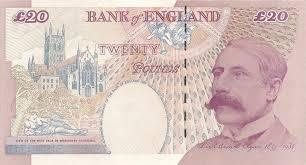
If someone like Elgar had penned Melancholy, they would have called it an Elegy for Korg M1. It’s really just an exploration of what I could do musically with the synth and its limitations are representative of what happens when trying to emulate rather than innovate. I hadn’t learnt this yet, so a better thing to listen to would be Pieces in a Modern Style by William Orbit. Orbit does not attempt make synth strings sound like strings – they deliberately sound like synths, and this adds something different and new. I love what he did with Barber’s Adagio. I also a love great orchestra playing Barber’s Adagio. They’re just different interpretations of a great piece.
My grandma on my Dad’s side still just about lived on her own well into her late 90s. She had a big old detached house, one road back from the beach in Bexhill in East Sussex. Bexhill had a pebbly beach that smelt of seaweed and cold water. It also had a tortuously long promenade that smelt of old ladies. We never got an ice cream.
We did however get fed at Grandma’s because she was one of those excellent old-style cooks. She derived pleasure from feeding people in a way that my mother never did. And boy did Grandma feed us. It wasn’t fancy; it was good; it was plentiful. There were roasts, and roast potatoes and batter puddings and vegetables of all varieties which were always soft, salty and sweet, which caused no end of problems for my Dad, who had had type 1 diabetes since a teenager. And there were always sausages because grandchildren like sausages. And then after I had quietly excused myself from the table for ten minutes or so to indiscreetly make some room in my belly again, I would come back for at least two helpings of pudding, and especially custard tart. Oh, the custard tart, with just a bit of nutmeg. Grandma always made rock buns the morning we were going, so we’d have something to take home with us. Soft, sweet and just a hint of mixed spice; horrid by the next day but we still ate them.
Grandma had a most peculiar way of doing bread and butter – she would take off the end crust and then butter the loaf and then slice a wafer-thin piece of buttered bread from the loaf in mid-air somehow without excising her thumb. The excuse was Grandpa who was always muttering about his false teeth and not being able to chew. He would take at least an hour to cut up everything into pieces so small as to be invisible, and then of course complain it was cold. He did like to complain. So Grandma cut his bread wafer thin.
| Grandma’s Kitchen |
| You remind me of Grandma’s kitchen Safe and secure (in the knowledge of a good meal) You remind of all the things that Keep my feet off the floor (flying for real) You remind me of adolescence Not a clue where I’m at (or for that matter why) You remind me of birthday presents All glittery wrapped You remind me of all I ever You remind me of all I never You remind of all my future You remind of roast potatoes doused in gravy You remind me of stormy weather Excitingly tense (in the promise of a good night) You remind me of sweaty leather In you every caress (flying blinded) You remind me of ice creams on the beach You remind of biscuits out of reach You remind me of down upon a peach You remind me of Grandma’s Kitchen |
Like Grandma, Grandma’s Kitchen itself was something from another era. It looked like it hadn’t been decorated since at least 1930, with a ‘60s electric ringed cooker shoe-horned into a gap. With what could have been no more than a 10W bulb failing to reach any of the corners, this was a big old room, with a twin-tub washing machine, a walk in-larder full of treasures, and a unique special smell. It smelled of perpetual roast, of sausage and batter, of squidgy carrots and custard. It smelled of Grandma’s kitchen. It smelled of comfort and discomfort from always eating too much.
Many years later, we were lucky enough to be eating at the Manoir Aux Quat’ Saisons. Lovely grub, and a bit posher / pricier than Grandma’s gaff. My starter was a woodland mushroom risotto. Yum. The sommelier brought me a glass of something so pungently woody to go with it that on my first sniff and sip, I was instantly an eight-year-old cub scout standing in a pile of semi-rotten damp leaves at summer camp. The experience was remarkable; it was all I could not to explode in tears at the table. We sometimes put too much store in sight and sound. The other senses, touch, taste, and in particular, smell, are profoundly more powerful to transport us in memory. As I write this, my recollection of Grandma’s Kitchen is making my mouth salivate, and my back ache. Good memories.
Beat Me Up is a love song. As someone I occasionally respect said:
“it’s a funny way of saying so”
Enough said.
Thank God for Tush’s guitar coming to the rescue on this, or it really would have fallen flat on its face.
| Beat Me Up |
| You beat me up at the start of the morning When I see you lying there, naked, next to me. You beat me up when the sun starts its dawning And you walk in from the kitchen with you first coffee. You beat me up when I drive to the office. Once I’m there, it’s the day I can’t wait to get through. You beat me up on the strength of a promise: That when I get home I can make love with you. You beat me up when you call at twelve thirty: To know you’re still there and still thinking of me. You beat me up: When I’m stood on the train home, I am crushed in the rush almost contentedly. You beat me up once I’m back in your arms And I’ve made it through another day away from you. You beat me up as we race up the stairs, Stripping off like the whole thing is still new. |
Bringing babies into the world is so full of excitement and wonder and trepidation and unknowns. And in today’s modern world of science and technology and medicine, whatever happens can be sorted, right? There are all these pre-natal classes in which mum’s right to choose the best aromatherapy scent and the best pod of whales to escort her experience is drummed into us dads as things to support when they make their choices on the big shiny planner. We’ve got other jobs – like making the sandwiches and getting them in the freezer ready for the big day, and then remembering to put them in the car on the way in. Should anyone get the sarnies as far as the ward, then top marks – you’ve got some ammunition ready for her to throw at you because she’s not going to be eating them.
You rush to the hospital, possibly killing a couple of pensioners on the way. The level of anxiety in finding a parking space near enough the entrance is probably enough to precipitate a birth in the car park. And then you get to the ward, and er, nothing happens.
There is now nine months’ worth of adrenaline in Dad’s system with no-where to go and no opportunity of being burned off. Never mind the Branston Hicks – that much adrenaline hanging around is really stressful itself. Don’t even think about nipping off for a coffee.
The planned birthing pool has someone else in it. The whales are in Antarctica, and the foot masseur with the special ginseng candles is on a break in Bali. It’s not going to plan, and there’s fuck-all you can do about it. It looks like it’s going to be a while so we must chill and rely on the trust we all build in doctors and nurses and the NHS over a lifetime. It doesn’t matter that it’s a busy thundery night in the holiday season, they will keep an eye on what matters, and everything will be fine.
You hear a lot about pre-eclampsia in the run up to the big day.
I’d never seen a blood pressure reading either rise so quickly, or get so high.
Nobody ever says the eclampsia word on its own.
The fracas that followed is a nightmare of Pre-Raphaelite clarity, minus a few redactions. An avalanche of violent professional recriminations flared up and stopped almost as quickly as it began, and about half the staff in the hospital suddenly appeared from nowhere. Drips and drugs were shoved in and pumped from all angles. I was suddenly in scrubs, in theatre, and firmly encouraged to sit down.
This account is a glorious simplification of what took a day and a half to happen and a year and half to sort of get over.
We called him Alex because of his curly-haired profile resembling the infamous Macedonian on a coin. Well, that’s the suitably romantic story anyway. It was completely different once he’d had a bit of wash but Alex it was. He was lovely and we were lucky to have him. I eventually came to realise just how lucky I was to have either of them.
Writing Oblivion was my way of letting some of this go and move on. We did move on remarkably quickly. Alex was joined by brother Elliot nineteen months to the day later.
There isn’t a song about our second (slightly less eventful but still exciting) childbirth, but deciding to call him Elliot did mean I got the name for the album for free. Believe what you like.
| Oblivion |
| In the search for a son She shook hands with oblivion At times I thought we were done for Instead of three there would just be one Me! All on my own Free? TO live on alone How could this be? It wasn’t planned till 81 at the very least It’s at moment like these I learn what love means When all of life’s themes start unravelling What I could lose; what I could no longer choose You can see where my mind’s eye is travelling Free! All one my own Me! In a house not a home How could this be? It wasn’t planned till 81 at the very least The words of a song can only fail to encompass The union of love and fear that engulfs us There’s a danger that all that is left is an empty shell That tolls solemn like a broken bell And all through this time, I still fail to believe in A God that could even suggest that you’re leaving Your life in their hands as our love lies bleeding There’s no room for miracles here It’s at moments like these I learn what love means Even in such pain There is no room for blame We are back on our own We’re in a home of our own We are perfectly happy to be here |
Cold Caller is less personal. It’s another one of those songs that is about an imagined protagonist couple who are not quite getting on the way they should. Perhaps the impact of Selfish was more pervasive than I let myself acknowledge, or perhaps I was just at that age where writing about love and loss, albeit in the imagined third person, was a perfectly grown-up thing to do.
The key thing about Cold Caller is its meter. I wanted to try writing something in 5/4 because it’s a challenge to both write and record. The sequencer is a great facilitator of these infrequently used rhythms: it does all the hard work for you by religiously holding the beat from start to finish. You can tell where the sequencer and programming are used – it’s in time. Where there is a live recording of something, like the vocal, there is significantly more ambiguity because it’s so much harder. And I made it even harder by not only writing in 5/4 but overlapping the lead lyrics in two voices so that the first occupied the first three beats of the bar, and the second voice took the last three beats of the bar. Clearly one person can’t sing this on their own, so it makes for a confusion of communication, which of course is the subject of the song – talking over each other and not listening. All very meta I’m sure.
| Cold Caller |
| Cold caller: ringing her up, putting him down Cold caller: hanging up: fooling around Going fine, hunky dory Starts the sad man’s lonely story Forgets one day to call back home And all he’s left with is this phone Calls the next day to no avail as She’s out back there watering flowers Both start feeling unimportant So the next day don’t bother calling He can’t see the point travelling Friday Just to come back up on Monday So he extends his hotel room And spends the night not getting through She’s on the phone calling her sister When he gets through, too late, he missed her Se’s not heard so she goes out And takes a girlfriend, a talent scout Before it’s time she’s had too many At least she’s happy if only merry Ends up bedding fellow boozer In the morning he’s the loser He thinks he’s lonely and has the right To buy a partner for the night He feels too guilty to call back home She’s busy to break up on the phone |
I had by now got into the habit of including a substantial instrumental on each Blue Powder album, and Accident & Emergency is no exception. There’s no fancy title: this my first stab at a one-movement piano concerto, and I named it after the album.
For Accident and Emergency we hired a digital piano for the weekend on which we captured live recordings of the pieces that warranted real playing, like the concerto, which was frantically performed like Liberace on acid in the dining room, and then subtly edited in the captured midi to gently Tip-Ex over all the bum notes.
This album was the first appearance of PC-based software to record midi and align it to the audio, and the visual interfaces of the PC screens were a revelation. Chris had the tech, and it was last time I wouldn’t have such PC-based software myself. This is therefore the close of another tech chapter and how it influences the writing and recording process. We tried to avoid all unnecessary cheating with the quantise button on anything that needed to sound real, but given that the rhythmic framework for most tracks had been written in the M1 sequencer in the first place, much was effectively pre-quantised.
Tush was again invited to add his layers on towards the end of the process and he transformed everything he touched, turning sterile to alive; he used his guitar like a magic wand of reality, gently airbrushing musicality into whatever idea I was trying to convey. I still can’t overplay the impact his touch made: it’s not on every track, and where it’s missing it shows.
Chris revelled in the evolving toys, and quietly made my wide variety of styles and ideas into something that I think is our most coherent work yet. This new software thing, Cakewalk, would change everything. It was still in its infancy.