
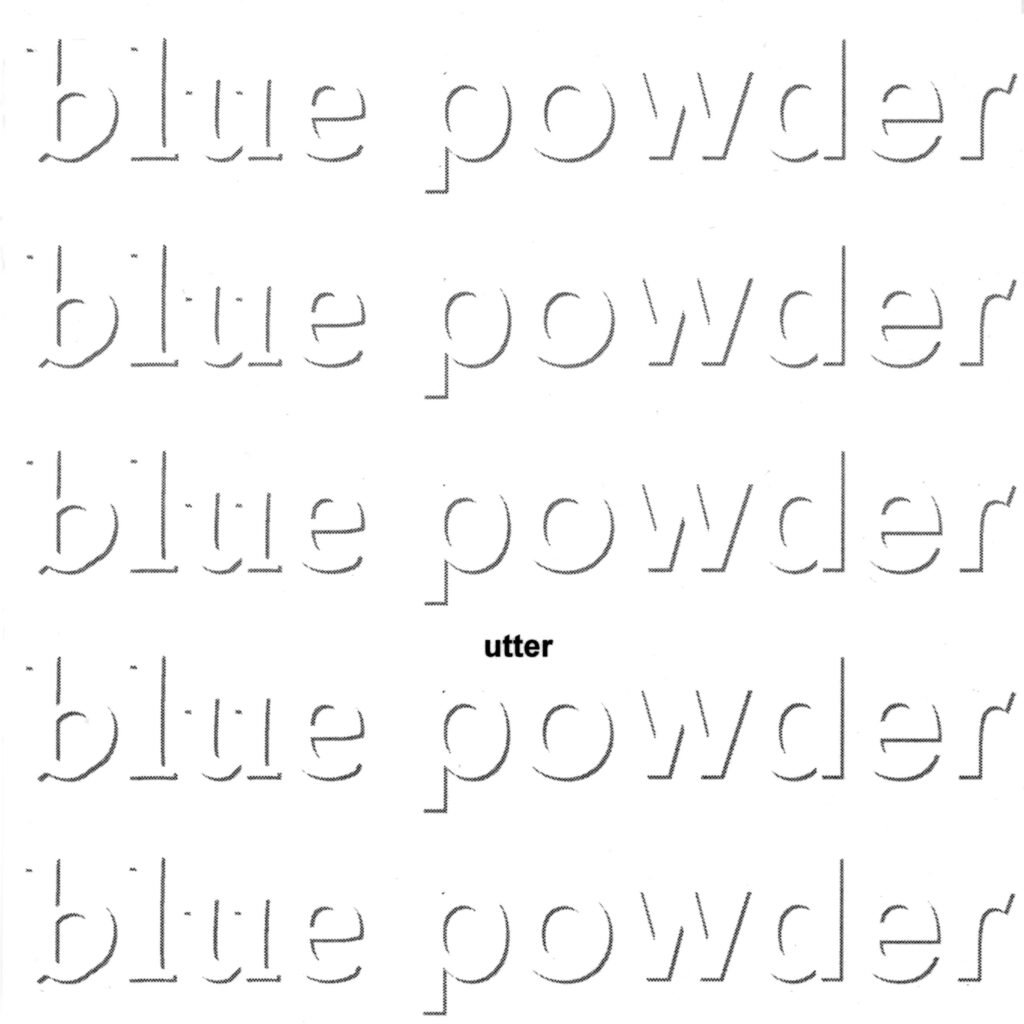
04 – I Guess This is a Hobby
After Sheer the remaining band members of Blue Powder splintered as we left the university and scattered to the corners of the country and world. That was the end of my time as a hobbiest music mixer and producer, or so I thought. In early 1993 after returning from a period of travel around the world Steve called me and said that as a Christmas present he had been bought time at a small studio in London to digitise the first two albums.
We met at Ladbroke Grove in the early summer and spent the day primarily being criticised for how uncommercial most of the tracks were but the engineer persevered and put a little effort into performing some rudimentary clean-up of the tracks. Digital music was developing quickly but DAWs were still very limited at this time so it was just EQ and a little compression. We left with two CDs burned, a novel (and costly) experience in 1993. The process did however get us talking about whether we could do another album, Tush was interested but living in Spain so it would need planning and time.
Freddie Four Track was replaced by Freddie 2, a slightly upgraded model but all in all the same with fewer broken buttons and maybe a more consistent tape speed. University was behind us, so was access to all the equipment which, at the time, had seemed limited but not so now. Steve had invested in a microphone, Tush had his guitars and some effects. A drum machine was acquired from somewhere. Our studio now was the living room of Steve’s new house. Meet-ups were planned for irregular weekend dates, generally when Tush was in the country.
Apart from the change in availability and recording location, the basic approach behind Utter reverted to that used on the first two albums – Steve laid down some core material, Tush added to it sometimes by taking the master with him and then we would meet up to lay down and mix the final content. There was one big change in the form of a hired DAT (Digital Audio Tape) recorder used for the final master – this was the first step on a path to a fully digital solution which would take many years. Unfortunately, the DAT recorder faithfully recorded in very good detail all the issues with using an analogue four-track!
DAT is one of those technologies which arrived with a lot of promise in the late 1980s – higher audio quality than CD, the ability to record and the ability to make perfect copies – it was positioned as the ideal replacement for the analogue compact cassette. It did make an impact in recording studios but its adoption in the wider consumer market was limited. The units were expensive and, partly thanks to legislation enforced by the music industry which added extra taxes to the media on the basis of its ability to make high-quality copies of pre-recorded music, the tapes were also expensive.
Roll forward to the late 1990s when consumer CD writers were affordable and mp3 was about to dominate, the consumption of music was on a path of change in which the idea of complex digital tape did not have a place and so DAT retreated to the studios before disappearing altogether by the new millennium.
Utter took shape over two years, primarily with just Tush and Steve as the musicians, although we did have a new vocalist, Elaine, on some tracks. It marks an odd inflection point being the album which had the least resources available to it compared to any of the previous or future albums. It was the last fully analogue album in terms of recording (as the final master was digital) and was the last album which only had a two-track master.
For me Utter is the album I am least pleased with, not because of the tracks themselves, but because it shows several weaknesses in the mixing and recording. Vocals in particular lack compression and effective EQ leading to a lack of presence, with them often lost in the mix. In other parts there seems to be excessive reverb throwing vocals or instruments way off into the back room. With only a two-track master even when I remastered the album in 2020 there was only so much that could be done which is a shame as there are some great tracks on it.
For 2024 with some new tools to hand the new master has gained further clarity and even allowed for some adjustment to the vocals. The new 2024 digital remastered version is available on Spotify and most other streaming platforms.